
About Nila

Why I built Nila.

A founder note from Erin Beattie on perimenopause, chemical and surgical menopause, and why we built somewhere warmer to land.

Nila is built for perimenopause and menopause first, including for neurodivergent women and trans and non-binary people whose experience of this stage gets routinely overlooked. If you're here because of endo, adenomyosis, premenstrual dysphoric disorder (PMDD), post-pill, thyroid stuff, or another hormone-driven condition, a lot of this still speaks to you, and you're welcome here.

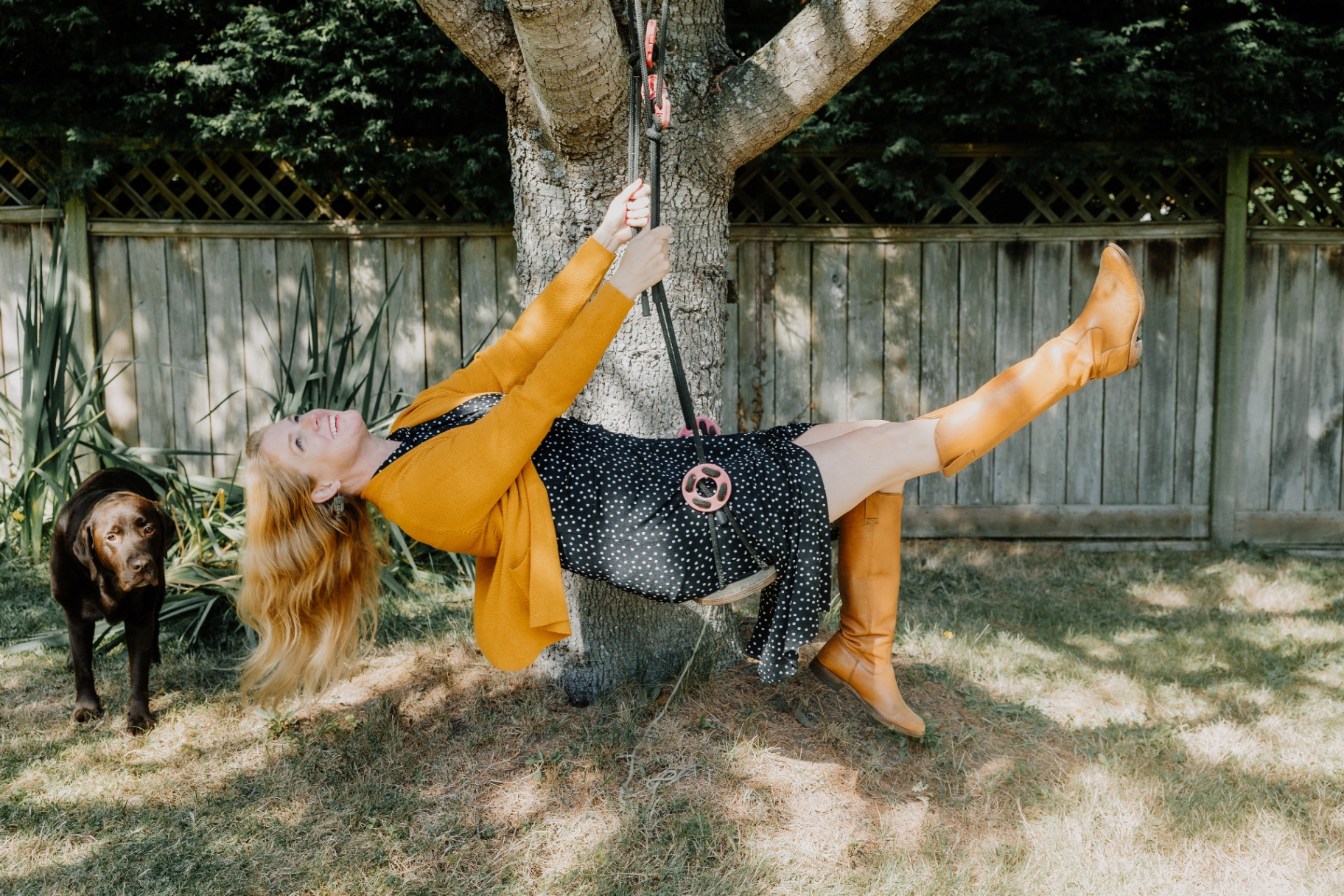
Erin Beattie, founder of Nila, laughing on a tree swing in a sunlit backyard with her chocolate Labrador nearby.
A note from the founder

Growing up, menopause was described as simple: one day you had your period, the next you didn't. That was the entire story. No one mentioned that hormones shape every part of the body, mood, memory, bone, heart, sleep, sense of self.

For me, perimenopause tangled with endometriosis until I couldn't tell where one ended and the other began. Then medication tipped me into chemical menopause overnight. Eventually surgery delivered me somewhere I hadn't been ready to imagine. Three doors into the same room, and almost no map for any of them.

You can choose a course of action and still mourn what it costs you.

I kept looking for somewhere that held the whole picture: research that took us seriously, stories that weren't performing, a shared language for what was happening in my body, and a community that didn't reduce any of it to a punchline. It wasn't there. So I started building it, on my own, in the hours around everything else.

Half the problem wasn't the practitioners, it was that I didn't know which kind to book, what to ask, or how to describe what I was feeling without sounding like I was making it up. You lose your sense of normal. You start to second-guess everything, including yourself.

What I actually had was screenshots. Hundreds of them. A notes app full of half-questions for my doctor, a calendar stacked with practitioner appointments, and one very patient friend who I asked the same things over and over because brain fog kept eating the answers. Nila is, in a real way, the place I wish I'd had open on my phone the whole time.

Everyone needs a Nila. Someone steady, well-read, and in your corner at 2 a.m. If you don't have someone like that yet, I hope this is a start.

And underneath all of it, the burnout most of us have been carrying since the pandemic, the kind that borrows perimenopause's clothes until you can't tell which is which.

Nila is that place. Evidence-based research. A quiet, kind community. Symptom tracking that stays private. A directory of practitioners with a guide to which one does what. And a promise: editorial independence, full disclosure, and a refusal to recommend anything we wouldn't pass on to someone we love.

If you're here, in the fog of perimenopause, the shock of chemical menopause, or the long reality of surgical menopause, you're not alone, you're not broken, and you're not behind. You're changing. The strength lives in there.

Erin Beattie · Founder of Nila · Communicator, survivor, quiet rebel

Erin also writes long-form essays on menopause, survivorship, and identity. Read them on Medium.

What Nila is

The room we wished existed.

  • A library of evidence-based research, reviewed and dated.
  • A quiet, kind community, not another place to perform.
  • Symptom and mood tracking that stays yours.
  • A directory that helps you figure out which kind of practitioner you actually need, and a shared language to bring into the room.
  • A founder who's been through perimenopause, chemical menopause, and surgical menopause, and is still here.

What it isn't

And what we'll never pretend to be.

  • A medical clinic. We don't prescribe or diagnose.
  • A wellness shop. We're not selling you a 12-step protocol.
  • A hot take farm. We move slowly, on purpose.
  • Anti-HRT, pro-HRT, anti-supplement, or pro-anything. We're pro-you-deciding.
  • Free for everything. The basics stay free, forever, the community, the weekly check-in, a curated slice of research. Premium funds the rest.

Why this room had to exist

The numbers behind the gap.

Not to scare you. To explain why information this basic still feels this hard to find. Sourced and dated.

1.2B
Women in or past menopause by 2030, roughly one in seven people on the planet.
WHO, 2024
4.6 yrs
Average time from first perimenopause symptoms to diagnosis.
Newson Health, 2022
~5%
Of healthcare R&D and investment funding goes to women's health.
WEF, 2026

How we work

Three promises we keep, even when no one's checking.

01

Editorial independence

Sponsorship never shapes what we say. Sponsored items are labelled, dated, and held to the same evidence bar as everything else.

02

Reviewed, not recycled

Research is summarized in plain language by our editorial team, graded for evidence quality, and re-checked over time. We don't yet have outside clinical reviewers, when we do, we'll credit them by name. If a study is weak, we say so. If we don't know, we say that too.

03

Privacy by default

Your tracking data, journals, and check-ins are yours. We don't sell them, train models on them, or surface them to anyone but you.

FAQ

Common questions

Still curious? Drop us a line.

Memberships & affiliations

Have a story, a question, or something to share? We'd love to hear it.